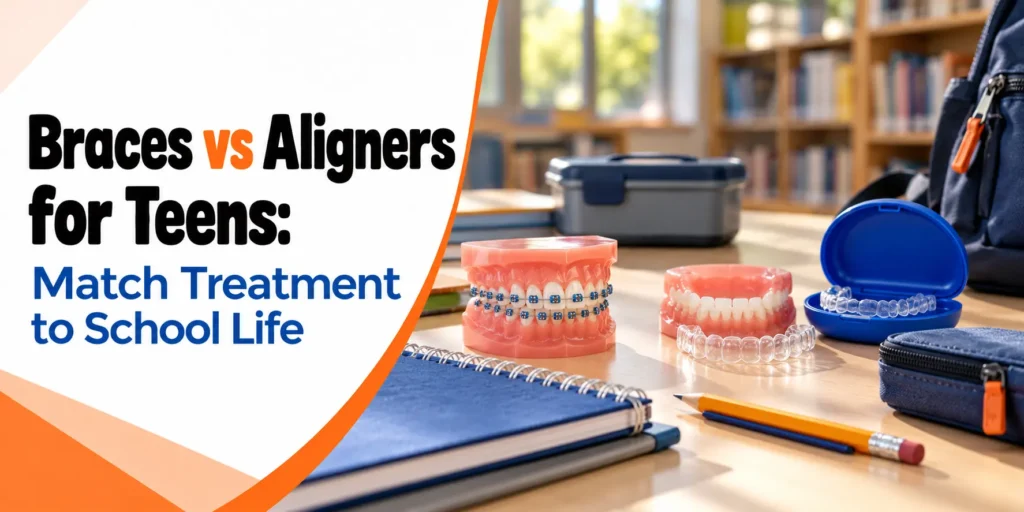
Your teen wants less noticeable treatment. You want something they can manage between school lunch, homework, and practice. Choosing braces vs aligners for teens means looking at both priorities alongside what their teeth need.
Braces stay attached, while clear aligners come out for meals and cleaning. That difference affects everyday life, but neither option wins for everyone. The best choice combines a suitable treatment plan with habits your teen can realistically maintain.
Braces vs Aligners for Teens: What Changes?
Braces use small pieces attached to teeth and connected by wires. Clear aligners are removable plastic trays that gradually move teeth as the teen progresses through different sets. Invisalign is one aligner brand.
This teen braces comparison highlights the everyday trade-offs:
|
Factor |
Braces |
Clear aligners |
|
Appearance |
Visible; some options blend in |
Less noticeable, but still visible |
|
Removal |
Stay attached |
Removed for meals and cleaning |
|
Responsibility |
Cleaning, food choices ,appointments |
Those responsibilities plus consistent wear |
|
Food |
Avoid hard, sticky foods |
Remove trays before eating |
|
Cleaning |
Work around wires and brackets |
Clean teeth and trays separately |
|
Comfort |
Temporary soreness and rubbing |
Temporary pressure with new trays |
Can Both Fix Your Teen’s Teeth?
Both options can straighten crooked teeth, close gaps, and improve the bite, meaning how upper and lower teeth fit together. However, the movements needed determine which approach makes sense.
An assessment for teen smile correction checks more than appearance. Some teens can choose either option; others need a particular approach for a reliable result.
Clear aligners may also need small tooth-colored bumps or rubber bands. They are not always completely hidden. Ask what your teen’s actual setup would involve before deciding.
Will Aligners Fit Your Teen’s Routine?
Clear aligner suitability depends partly on whether the school day leaves enough time to wear them as prescribed.
Where Do the Daily Hours Go?
Aligners generally need about 22 hours of daily wear, following the treating professional’s instructions.
Consider three 30-minute meals plus a 90-minute practice without trays. That totals three hours out before snacks or cleaning, leaving only 21 hours of wear.
This example shows why families exploring removable trays for teens should discuss long practices and frequent snacks before starting. Skipping meals to reach a wear target is not a workable solution.
What Makes the Habit Easier?
Use a labeled case, phone reminders, and one agreed parent check-in. Practice the routine before the first school day.
Braces remove the need to remember trays. However, fixed braces for teenagers still require careful brushing, suitable foods, appointments, and any prescribed rubber bands.
How Do Lunch and Cleaning Compare?
Short lunch breaks can turn a manageable routine into a daily struggle. Plan around the time your teen actually has.
With Braces
Pack manageable foods such as soft sandwiches, pasta, or yogurt. Avoid hard candy, sticky sweets, and other foods likely to damage braces.
Carry a toothbrush and suitable cleaning tools. Dr. Nardea can help children understand how daily cleaning protects teeth during treatment and explain preventive care to parents.
With Aligners
Remove trays with clean hands and put them straight into their case, never a napkin. Eat, clean teeth and trays as instructed, then replace them promptly.
What About Sports, Band, and Photos?
Activities matter, but being an athlete or musician does not automatically make one treatment better.
Sports and Mouthguards
Teens with braces need a mouthguard that fits around them. For contact play, teens wearing aligners should remove the trays and wear a mouthguard, following American Association of Orthodontists sports guidance.
Aligners do not replace protective sports equipment. Long practices also need a plan for meeting daily wear instructions.
Instruments and School Events
Braces or trays may take some adjustment when playing a wind instrument or speaking. Discuss rehearsals and performances beforehand.
Clear trays are less noticeable, but braces may feel easier to manage. Removing aligners for photos or events still counts toward time without them. Your teen’s preference deserves a place in the discussion.
Which Takes More Time and Money?
Neither treatment is automatically faster. Timing depends on the tooth movements needed, daily care, consistent aligner wear, and keeping appointments.
Ask how often visits are expected and whether appointment times fit school. Both options can require unexpected attention.
Compare the full written price, including:
- Lost tray replacements or braces repairs.
- Additional treatment stages.
- Retainers worn afterward to help keep teeth in place.
- Insurance benefits and payment arrangements.
A lower starting price may not include everything. Ask what happens financially if treatment takes longer or your teen needs to switch options.
Choose Around Your Teen’s Real School Week
Choose treatment by working through four questions together:
- Can both options achieve the needed result?
- Can your teen manage the routine with realistic support?
- How will lunch, cleaning, sports, and appointments work?
- What does the full price include?
Bring a typical weekly schedule to the consultation. A treatment your teen understands, accepts, and can follow is more useful than choosing solely by appearance.
Why Choose Midtown Pediatric Dentistry?
At Midtown Pediatric Dentistry, families can discuss dental care alongside braces and aligner options. Dr. Nardea helps children protect their teeth and guides parents on preventive care during treatment. Bring your teen’s school schedule and concerns so the team can explain suitable choices, daily responsibilities, and the next steps clearly.
Quick Questions Before You Choose
These practical answers help families handle common school-day problems and recognize when to contact the treating team.
What If an Aligner Goes Missing at School?
If an aligner goes missing at school, contact the treating office promptly. Explain which tray was lost and when. Do not move ahead or return to an older tray unless instructed; ask about replacement timing and costs.
What If a Braces Wire Rubs During Class?
For braces wire rubbing during class, cover the irritating spot with dental wax and contact the treating office. Ask the school nurse for help if needed. Avoid cutting or pulling the wire without professional guidance.
Can My Teen Switch From Aligners to Braces?
Switching from clear aligners to braces may be possible if wear habits or treatment needs change. Ask for a fresh assessment and a written explanation of extra costs and timing before agreeing to a different treatment plan.
Can My Teen Leave Aligners Out Until After School?
Teens should wear clear aligners at school as prescribed, rather than waiting until they get home. Regularly missing those hours can slow progress or affect tray fit. Ask the treating team for help with a workable school routine.
What If My Teen Feels Embarrassed About Brushing?
If brushing after school lunch feels embarrassing, ask whether the nurse can offer a private space. Practice removing and replacing trays at home, and keep a compact cleaning kit handy. Discuss ongoing difficulties before choosing aligners.