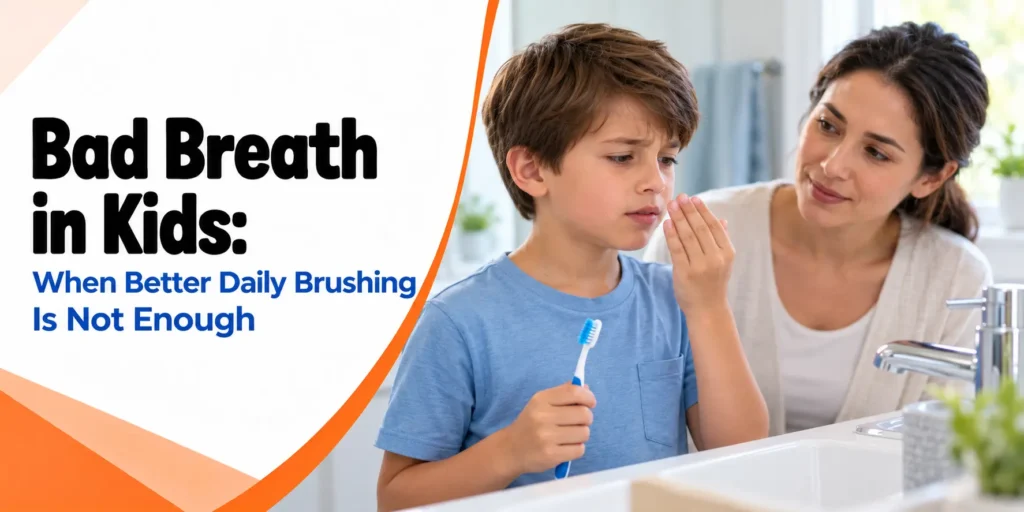
Your child brushes every morning and night, yet their breath still smells when they talk. Should you change toothpaste, brush longer, or book a dental visit?
Bad breath in kids does not always mean poor brushing. Food between teeth, tongue buildup, dry mouth, and nose or throat problems can contribute. The useful next step is to check what brushing may miss and notice when the smell returns.
Bad Breath in Kids: Morning or All Day?
Morning breath usually improves after breakfast, water, and brushing. During sleep, the mouth produces less spit, allowing odor-causing bacteria to build up.
Breath that remains unpleasant throughout the day deserves closer attention.
|
Pattern |
What to notice |
|
Mainly after sleep |
Is it clear after the morning routine? |
|
After strong-smelling food |
Does it gradually fade? |
|
Repeatedly after brushing |
Are there missed areas, dryness, or other symptoms? |
These patterns help guide a conversation with a dentist. They cannot identify the cause on their own.
Why Does Bad Breath Survive Brushing?
Teeth are only part of the picture. Several places can hold buildup, and some causes need more than a toothbrush.
Food Between Teeth and Buildup on the Tongue
A toothbrush cannot fully clean between touching teeth. Trapped food and the sticky layer of bacteria on teeth can contribute to odor.
The tongue can also collect food and bacteria. A tongue coating in a child may look like a pale layer. Gentle cleaning may help, but painful patches or coating that stays should be checked.
Dry Mouth and Sleeping With an Open Mouth
Spit helps wash away food and bacteria. When the mouth becomes dry, smells can become more noticeable.
Mouth breathing and bad breath may occur together, especially with a blocked nose. Notice whether your child sleeps with their mouth open, snores regularly, or wakes with dry lips. Discuss ongoing symptoms with their doctor rather than treating them only with extra brushing.
Cavities, Sore Gums, or Nose and Throat Problems
Food can collect around a cavity, while sore or bleeding gums may signal buildup that needs attention. A cavity requiring tooth-colored repairs will not heal through harder brushing.
Blocked noses and throat problems can also contribute. Tooth pain, gum bleeding, fever, or a sore throat provide useful clues. Breath smell alone cannot tell you which problem is present.
What Can Parents Check at Home?
Start with a calm check of the routine. Explain that you are helping solve a problem, rather than blaming your child.
- Watch the brushing. Aim for two minutes twice daily with fluoride toothpaste. Check the back teeth, inside surfaces, and gum edges. Help until your child can clean thoroughly.
- Clean between touching teeth. Help with floss once daily. A careful brusher can still leave food between back teeth.
- Clean the tongue gently. Use a soft toothbrush without pushing far back or causing gagging. Stop if it hurts or bleeds.
- Offer water regularly. Notice repeated dryness, especially after sleep. Mention medicines to the clinician, but do not stop prescribed treatment yourself.
- Check removable items. Clean retainers and sports mouthguards according to their instructions.
- Record the pattern. Note when the smell returns, other symptoms, and what you have tried.
When Is It Time to Get Help?
Persistent bad breath in a child needs assessment when consistent home care is not helping. Other symptoms can guide whom to contact.
When to Call the Dentist
Arrange a children’s mouth checkup if the odor keeps returning, especially with tooth pain, visible tooth changes, or bleeding gums. Do not wait months for a routine appointment.
Dr. Nardea can examine your child’s teeth and gums and explain whether a cleaning, changes at home, or treatment is appropriate.
Significant tooth pain or swelling calls for prompt urgent dental help. Breathing or swallowing difficulty or rapidly increasing facial swelling requires emergency medical care.
When to Call Your Child’s Doctor
Contact the doctor about ongoing congestion, frequent mouth breathing, regular snoring, fever, or throat symptoms. Follow up if dental checks find no explanation.
A foul smell with discharge from just one nostril can indicate something stuck in the nose. Seek prompt assessment and avoid probing for it yourself.
What Can a Dental Cleaning Fix?
A pediatric dental cleaning removes soft buildup and hardened deposits that a toothbrush cannot clear away. If buildup contributes to the smell, professional tooth cleaning may help.
Cleaning and an examination serve different purposes. The exam checks for problems that need separate treatment. Cleaning cannot repair a cavity or resolve every nose or throat concern.
Bring your notes about timing, symptoms, and home care. They help the dental team understand what happens between visits.
When Bad Breath Keeps Coming Back
Check the routine, note patterns, and seek help when the smell persists. More brushing is not always the answer. A dental exam can identify mouth-related problems, while your child’s doctor can assess other symptoms. Keep the conversation supportive so your child feels comfortable asking for help.
Why Choose Midtown Pediatric Dentistry?
Midtown Pediatric Dentistry helps families understand children’s dental concerns through explanations and gentle care. Dr. Nardea guides parents through findings and treatment choices, helping them understand whether tooth or gum problems need attention. For ongoing bad breath, arrange a visit to discuss symptoms and practical next steps for your child.
Quick Questions About Kids’ Bad Breath
These answers cover common concerns when brushing has not solved the problem.
Why Does My Child’s Breath Smell After Brushing?
Bad breath after brushing can come from food between teeth, tongue buildup, dry mouth, or a dental problem. Help with daily flossing and gentle tongue cleaning, and arrange a dental check if the smell keeps returning.
Can Mouth Breathing Make My Child’s Breath Smell?
Mouth breathing can dry your child’s mouth, reducing the washing action of spit and allowing odor to build up. Offer water and discuss ongoing mouth breathing, blocked noses, or regular snoring with your child’s doctor.
Does a White Tongue Mean My Child Needs More Brushing?
A white tongue can reflect trapped food and bacteria, but appearance alone cannot identify the cause. Clean gently with a soft toothbrush. Ask a dentist or doctor about a coating that persists, hurts, or forms patches.
Will Mouthwash Fix My Child’s Bad Breath?
Mouthwash may freshen breath, but it cannot replace brushing, flossing, or treating the cause. The American Dental Association advises no mouthwash under six unless a dentist directs it; follow age labels for older children.
What If My Child’s Dental Check Finds Nothing?
If dental checks find no cause, discuss persistent bad breath with your child’s doctor. Mention congestion, mouth breathing, snoring, medicines, and throat symptoms so the next assessment follows your child’s symptoms.